

Essential Blood Tests for Your 1-Year-Old: What to Expect
At Universal Pediatrics, we make essential blood testing for your 1-year-old simple, comfortable, and informative. These common tests help monitor healthy growth, check for anemia, evaluate nutrition levels, and screen for potential health concerns early. Our compassionate team explains each step, offers gentle care, and ensures parents feel informed and supported. With accurate results and expert guidance, Universal Pediatrics helps give you peace of mind and keeps your child on a healthy developmental path. For more information, contact us today or book an appointment online. We are conveniently located at Niles Children’s Clinic, and Wible Family Medicine in Bakersfield, CA.
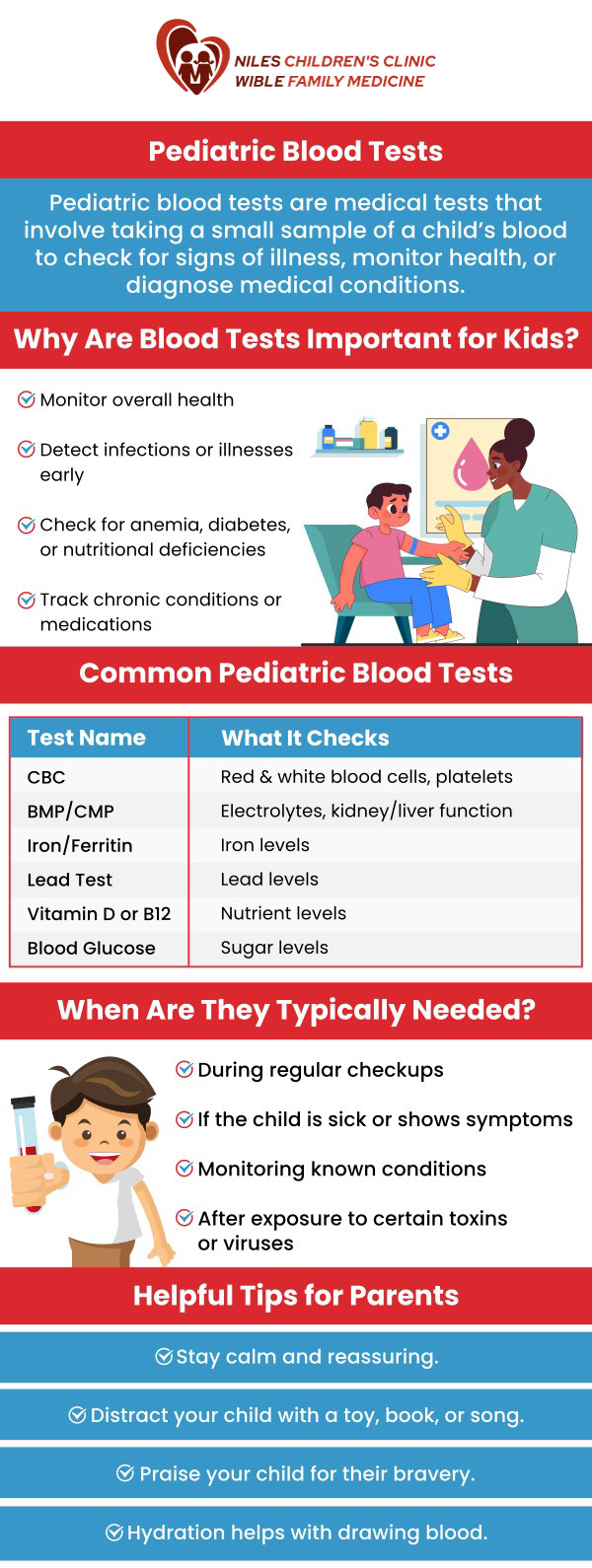
Table of Contents:
What are the common blood tests for a 1-year-old?
Why does my 1-year-old need a blood test?
Are blood tests painful for 1-year-olds?
How should I prepare my 1-year-old for a blood test?
Setting the Foundation for Healthy Growth at Universal Pediatrics
At Universal Pediatrics, we are committed to supporting your child’s health and development at every stage. When your 1-year-old visits our practice for a well-child checkup, our pediatric team may recommend certain blood tests as part of their routine health assessment.
Common Blood Tests for 1-Year-Olds: These tests help us detect anemia and assess your child’s overall blood health.
● Early identification of anemia is important for healthy growth and brain development.
● If your child is at risk for iron deficiency, we may also check their iron levels. Identifying and treating iron deficiency early can prevent potential developmental delays.
● We follow guidelines to screen for lead exposure, especially for children living in older homes or at increased risk. Lead testing is crucial because even low levels of lead can impact a young child’s brain development.
● Depending on your child’s medical history, family background, or if any symptoms are present, we may recommend further blood tests. These may include screening for infections, inherited conditions, or, when indicated, specialized tests for metabolic or genetic disorders.
We personalize our recommendations based on your child’s unique risk factors and current health. Our providers are always available to discuss which tests are most appropriate for your child and to answer any questions you may have.
At Universal Pediatrics, we prioritize your child’s health, growth, and development at every stage. For our one-year-old patients, our pediatricians may recommend a blood test as part of routine care. These tests help us ensure your child is developing properly and staying healthy.
A common reason we perform blood tests at this age is to screen for anemia—a condition caused by low iron levels that can impact your child’s energy and development. Additionally, we follow guidelines to screen for lead exposure, especially if your family lives in an area where this risk is higher.
Blood tests can also help us check for infections, assess how well your child’s organs (like the liver and kidneys) are functioning, and detect inherited health conditions early on. If your child is experiencing symptoms such as tiredness, unusual bruising, poor appetite, or delays in reaching developmental milestones, our team may recommend a blood test to help us diagnose and treat any underlying issues promptly.
We understand that blood tests can be an uncomfortable experience for 1-year-old children. Our caring pediatric team is experienced in working with infants and uses gentle techniques to minimize discomfort. At this age, children have delicate skin and veins, so we always use a very fine needle and collect only a small sample of blood, usually from the arm or the back of the hand.
Most children feel a quick pinch or sting when the needle is inserted. This may cause them to cry or become upset, but the discomfort is typically mild and lasts only a few seconds. Any pain usually resolves quickly once the test is complete. Occasionally, some children may have minor bruising or soreness at the site, but this generally disappears within a day or two.
Our team encourages parents to stay close, hold their child, and help distract them during the procedure to provide comfort and reassurance. If you have concerns about your child’s reaction to blood tests or would like tips on making the experience less stressful, please speak with one of our healthcare providers. We are committed to making every visit as comfortable and positive as possible for both you and your child.
We understand that having your 1-year-old undergo a blood test can be stressful for both you and your child. Our caring team is dedicated to making the experience as comfortable and smooth as possible. Here are some tips to help you and your little one prepare for their upcoming visit with us: Children are sensitive to their parents’ emotions. By staying calm and positive, you help create a reassuring environment for your child during your visit. If your child is old enough to understand, use simple words to explain that the doctor needs to take a tiny bit of blood to help keep them healthy and strong. Try to avoid words like “hurt” or “pain.” Instead, you might say, “You’ll feel a quick pinch, and then it’s all done!” Feel free to bring your child’s favorite toy, blanket, or comfort item to us. These familiar objects can help soothe your child before and during the test.
Unless your provider gives you different instructions, make sure your child is well-rested and has had something to eat before the appointment. Dress them in clothes with sleeves that are easy to roll up, which can help make the process smoother. If permitted, you can hold your child securely on your lap during the blood draw. Gentle words, soft singing, or a favorite toy or video can offer helpful distraction and comfort. Our Universal Pediatrics team will work with you to make your child as comfortable as possible.
The first year is a key period for growth, and blood tests help monitor a child’s nutritional and developmental health. Universal Pediatrics conducts screenings that evaluate for anemia, iron levels, and environmental exposure risks. Results are discussed clearly with parents, who receive personalized guidance on feeding, supplementation, and any additional testing if needed. Our goal is to support early detection and promote strong, healthy development.
If you have any concerns about the blood test or how your child might react, please let our Universal Pediatrics staff know in advance. We’re here to answer your questions, offer support, and provide strategies to make the process as smooth as possible for your family. For more information, contact us today or book an appointment online. We are conveniently located at Niles Children’s Clinic and Wible Family Medicine in Bakersfield, CA. We serve patients from Bakersfield CA, Maltha CA, Kayandee CA, Burness CA, Clovis CA, Panama CA, Alameda CA, and surrounding areas.
Check Out Our 5 Star Reviews



Additional Services You May Need
▸ Well-Child Visits
▸ Sick Visits
▸ Immunizations
▸ Chronic Disease Management
▸ Newborn Care
▸ Developmental Screenings
▸ School Physicals
▸ Nutritional Counseling
▸ Behavioral Health Support
▸ Hearing and Vision Screenings
▸ Lactation Support
▸ All Services




 Send Text
 How May I Help You?