

How to Know When Your Child Needs a Blood Test
At Universal Pediatrics, our experienced providers help parents understand when a blood test may be necessary to support their child’s health. If your child is experiencing ongoing fatigue, frequent infections, unusual bruising, poor growth, nutritional concerns, or symptoms that don’t improve with standard care, a simple blood test can provide important answers. Our team offers gentle, child-friendly testing in a comfortable environment, ensuring accurate results and clear guidance so parents can make confident decisions about their child’s care. For more information, contact us today or book an appointment online. We are conveniently located at Niles Children’s Clinic and Wible Family Medicine in Bakersfield, CA.
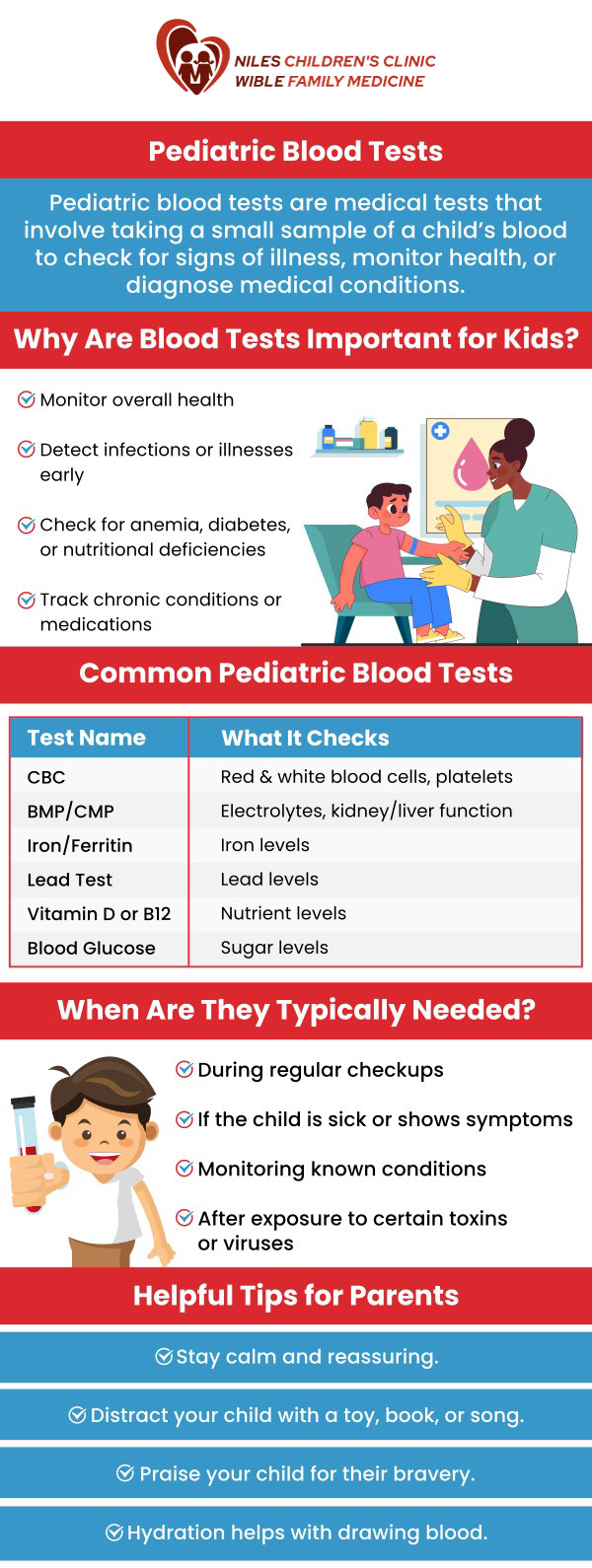
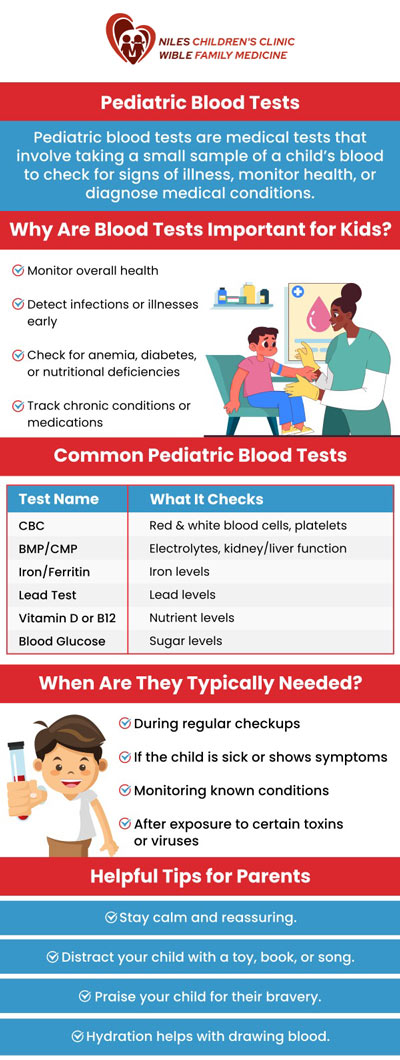
Table of Contents:
What are the common reasons a child might need a blood test?
Can a blood test help diagnose allergies in children?
Are blood tests necessary for children without symptoms?
What can blood tests reveal about my child’s health?
Guidance for Parents on Blood Testing at Universal Pediatrics
We understand that blood tests are an important tool in ensuring your child’s health and well-being. Children may need a blood test for several reasons, and our experienced pediatric team is here to guide families through every step of the process.
One of the most common reasons we recommend blood tests is to diagnose or monitor infections. These tests help us determine whether your child is fighting a bacterial or viral illness and how severe the infection may be. Prompt and accurate diagnosis means we can provide the right treatment for your child as quickly as possible.
If your child appears pale, tired, or has a poor appetite, a blood test can help us check for anemia by measuring red blood cells and hemoglobin levels. We also use blood tests during routine checkups to screen for nutritional deficiencies such as low iron or vitamin D, especially if there are concerns about your child’s growth or development.
We often use blood tests to investigate unexplained symptoms like frequent infections, persistent rashes, or other immune system concerns. These tests can give us valuable insights into your child’s immune function or possible allergic reactions, allowing us to tailor a care plan specific to your child’s needs.
Children with chronic conditions such as diabetes may need regular blood tests to monitor blood sugar levels or organ function, including the kidneys and liver. Our team ensures these tests are performed with the utmost care and sensitivity to support your child’s ongoing health.
If there is a family history of bleeding disorders or if your child experiences unusual bruising or bleeding, we may recommend blood tests to evaluate how well their blood is clotting. Early identification of these issues allows us to provide effective management and peace of mind for families.
At Universal Pediatrics, we understand how challenging it can be to watch your child struggle with allergy symptoms such as sneezing, rashes, or digestive problems. Our experienced pediatric team offers comprehensive allergy evaluations to help identify and manage your child’s allergies effectively.
One of the diagnostic tools we use is a blood test called the specific IgE test. This test measures the amount of immunoglobulin E (IgE) antibodies in your child’s blood that are specific to certain allergens, including pollen, pet dander, or particular foods.
If your child has been exposed to an allergen and their immune system reacts, their body may produce IgE antibodies as a response. Elevated levels of these antibodies can indicate sensitivity to specific allergens. We often recommend this blood test if your child has skin conditions, such as eczema, that make skin prick testing difficult, or if they are taking medications that might interfere with traditional skin tests.
It’s important to remember that while the IgE blood test is a valuable part of our allergy work-up, it does not provide a complete answer on its own. The results are most meaningful when considered alongside your child’s symptoms, medical history, and a thorough physical examination by our pediatric providers. Sometimes, a child may have positive blood test results but not experience any allergic reactions, or vice versa.
We know that parents want to do everything possible to keep their children healthy. Blood tests are a valuable diagnostic tool in medicine, but they are not always needed for children who are healthy and do not have any symptoms. In general, most children who are growing and developing normally, and who have no concerning symptoms or risk factors, do not require routine blood work.
Our pediatricians typically recommend blood tests only when there are specific concerns. For instance, if your child is experiencing persistent fatigue, unexplained weight loss, frequent infections, or if there is a family history or other risk factors for certain conditions, blood tests may be necessary to help us get a clearer picture of your child’s health.
There are some exceptions where blood screening might be advised even if your child seems healthy. For example, we may recommend screening for anemia or lead exposure at certain ages, especially if your child lives in a high-risk environment or is part of a group with increased risk. Children with chronic illnesses, who are taking certain medications, or who have known genetic conditions, may also require regular blood tests as part of their ongoing care.
We know you want the very best for your child’s health and development. One of the important tools we use to understand your child’s overall health is blood testing. Blood tests can provide our pediatric team with essential information, starting with basics like whether your child has healthy levels of red and white blood cells and platelets. These numbers help our pediatricians identify conditions such as anemia, infections, or clotting disorders early on.
Blood testing also measures important chemicals and minerals in your child’s body, such as glucose, calcium, and electrolytes. These are crucial for your child’s energy, growth, and proper organ function. By monitoring these levels, we can ensure your child is developing as they should.
In addition to providing a general health overview, blood tests can help our team detect specific illnesses. For example, they can show whether your child’s immune system is fighting a bacterial or viral infection, or if there are signs of inflammation that might point to conditions like juvenile arthritis. We also use blood tests to check how well your child’s organs—such as the liver and kidneys—are functioning, and to screen for inherited disorders like sickle cell disease or cystic fibrosis.
If your child is a patient and has symptoms like fatigue, unexplained fevers, bruising, or poor growth, blood tests can help us pinpoint the cause and guide our next steps. We also use these tests to monitor how well your child is responding to treatments or medications. In some cases, we may recommend blood tests to check cholesterol levels or hormone balances, especially during adolescence or if there are concerns related to puberty.
Universal Pediatrics supports parents in recognizing when a blood test may be helpful in understanding their child’s health. If your child is experiencing changes in appetite, weakness, recurring stomach pain, or ongoing illness, testing may provide valuable insight. Our clinic offers a thorough evaluation and explains why a blood test may be needed, what it checks for, and how results guide treatment. This approach helps parents feel informed and empowered throughout the process.
Our priority is to provide accurate diagnoses and tailored care for every child. Blood tests give us the detailed information we need to make informed decisions about your child’s health, monitor ongoing conditions, and guide treatments. If your pediatrician at Universal Pediatrics recommends a blood test, it’s because it will give us valuable insight to help your child grow and thrive. For more information, contact us today or book an appointment online. We are conveniently located at Niles Children’s Clinic and Wible Family Medicine in Bakersfield, CA. We serve patients from Bakersfield CA, Maltha CA, Kayandee CA, Burness CA, Clovis CA, Panama CA, Alameda CA, and surrounding areas.
Check Out Our 5 Star Reviews



Additional Services You May Need
▸ Well-Child Visits
▸ Sick Visits
▸ Immunizations
▸ Chronic Disease Management
▸ Newborn Care
▸ Developmental Screenings
▸ School Physicals
▸ Nutritional Counseling
▸ Behavioral Health Support
▸ Hearing and Vision Screenings
▸ Lactation Support
▸ All Services




 Send Text
 How May I Help You?